
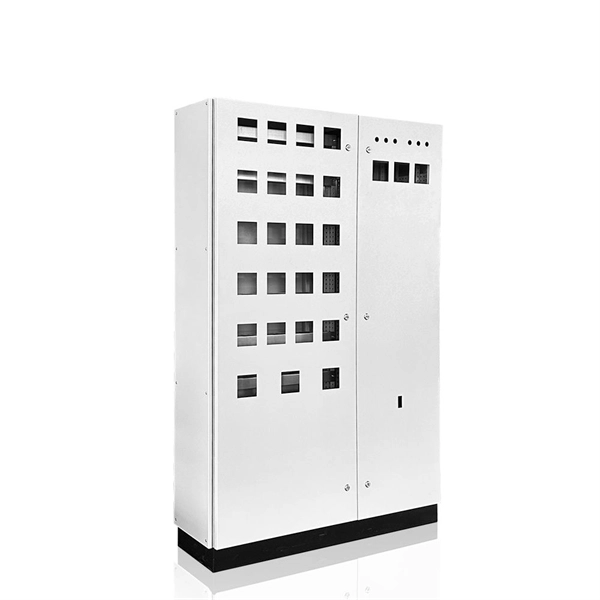
Differences Between DTU, FTU, TTU, and RTU
Understand the differences between DTU, FTU, TTU, and RTU in power distribution automation. Explore how these smart grid devices support monitoring, control, and communication in
Exploring Innovations in Distribution Automation Terminals (DTU and
Discover the booming market for Distribution Automation Terminals (DTUs & FTUs)! This comprehensive analysis reveals key trends, growth drivers, and leading companies shaping the
Distribution Automation Terminals (DTU and FTU) Insightful Analysis
This report provides a detailed overview of the Distribution Automation Terminals (DTU and FTU) market, offering valuable insights into market trends, key players, growth drivers, and
Feeder & Distribution Automation (FTU / DTU / TTU)
This page is a practical guide for designing feeder automation terminals (FTU, DTU and TTU) with the right mix of sensing, communication, power, security and IC choices.
Deep Dive into Distribution Automation Terminals (DTU and FTU
The Distribution Automation Terminals (DTU and FTU) market sees 14.86% CAGR, reaching $7.75 billion by 2025. Discover key growth drivers, regional shares, and competitive strategies shaping the
Smart Grid Systems:Technical Requirements for Smart Meter and
In smart grid systems, smart meters and distribution automation terminals (DTU/FTU) are often grouped under “industrial electronics.”
Substation Terminal Unit for FTU Distribution Network Automation
It can complete the remote monitoring, fault detection, fault isolation, etc. of distribution systems and equipment, and is suitable for the implementation and transformation of distribution network
Project Code: APM DTU/FTU 2017 A SYSTEM SOLUTION FOR
logies, stable, smart low and medium voltage distribution networks will be critically important to power systems. In 2016, China increased its investment in the automation of distribution, which brought
Comprehensive Analysis of Distribution Network Automation:
This article delves into the core hardware, communication protocols, and fault handling logic of distribution network automation, analyzes the deployment challenges of FTUs and DTUs in practical
Technical Requirements for Terminal Equipment in Smart Distribution
"Technical Requirements for Smart Distribution Network Terminal Equipment" (Standard No. T/CIEP 0206—2026) is a China Group Standard, released on January 16, 2026, and implemented from
Project Code: APM DTU/FTU 2017 A SYSTEM SOLUTION FOR TERMINAL DTU/FTU
A line loss calculation module is available in this application. For vast majority of distribution network manufacturers that lack experience in energy metering applications, this would be considered new
Distribution Automation Terminals (DTU and FTU) Insightful Analysis
The global Distribution Automation Terminals (DTU & FTU) market is booming, projected to reach $4.71 billion by 2033 with a CAGR of 8-10%. Discover key market trends, leading
The difference between DTU, FTU, TTU and RTU
The distribution network automation system generally consists of the following levels: distribution master station, distribution substation (permanently located in the substation, optional),
What Is Distribution Automation FTU And What Is Its Role In
What Is Distribution Automation FTU Distribution automation FTU (Feeder Terminal Unit) refers to the distribution network automation terminal unit, which is a key component in the smart grid
Optimal Placement of Multiple Feeder Terminal Units Using
In order to solve the placement problem of three kinds of feeder terminal units (FTU) in the distribution network, this paper proposes a novel mathematical model. The model considers
Key Devices in Smart Grids: DTU, FTU, and TTU
DTU, as an industrial-grade communication device, is primarily responsible for data collection, transmission, and remote monitoring. It can connect to various
A Distribution Network Automation Communication Module Based
3.1 DTU Communication Module Working Principle Distribution Terminal Unit (DTU) is a core device in the field of power distribution automation. As shown in Fig. 1, its main responsibilities
Global Distribution Automation Terminals (DTU and FTU) Supply,
FTU supports feeder automation function for automatic fault isolation and to reduce the impact of accidents. The global Distribution Automation Terminals (DTU and FTU) market size is
This reference is intended for preliminary fiber and communications infrastructure research. Optical interface, fiber type, port or core capacity, electrical input and output, enclosure protection, cooling, installation limits and applicable standards must be verified for the specific project.