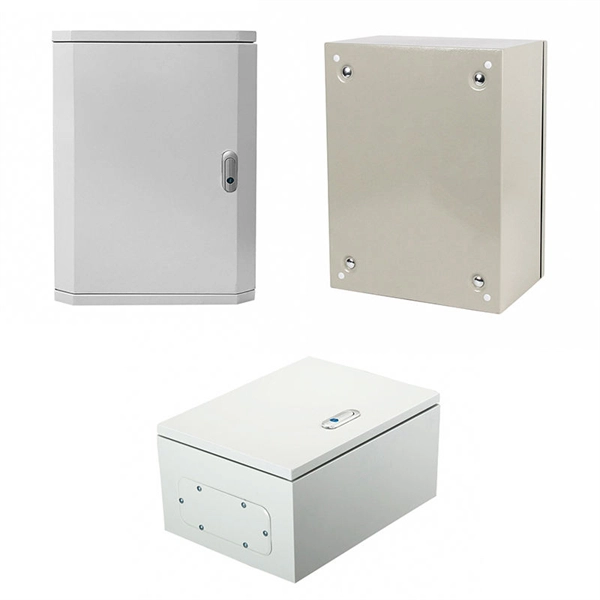
Proper installation of high and low voltage complete switchgear requires careful preparation, adherence to standards, precise assembly, and thorough testing to ensure safe and reliable operation.
Pre-
Installation Preparation
Before installation, it is essential to inspect the equipment and the installation environment. Ensure the location is well-ventilated, free of corrosive gases, flammable substances, and moisture, and that the foundation is level and capable of supporting the equipment weight. Verify that the power supply parameters—voltage, current, and frequency—match the switchgear specifications.
Unbox and inspect the equipment for transit damage, and confirm that all components, including switches, protective devices, and instruments, are present and meet the rated parameters.
Installation Procedure
Positioning and Fixing: Place the switchgear according to the layout drawings. Use appropriate fixings and tools to secure the equipment firmly to the foundation. Electrical Connections: Follow the wiring diagrams and operation manuals strictly.
Ensure all connections are tight, reliable, and free from dust or debris. Pay attention to proper cable routing to avoid mechanical stress. Grounding and Earthing: Connect the equipment to the grounding system according to IEC standards (e.g., TT, TN, or IT schemes) to ensure safety against electric shock and overvoltage.
Insulation and Safety Checks: Perform insulation resistance tests and verify that protective devices function correctly. Check that all switches, relays, and meters operate as intended. Compliance with StandardsHigh and low voltage equipment must comply with IEC and EN standards.
For example, high-voltage switchgear should meet EN 62271 requirements, including rated voltage and short-circuit breaking capacity, while low-voltage switchgear must comply with IEC 60439/61439 standards for rated current and outgoing circuits. Ensure that all equipment has the appropriate CE marking or equivalent certification for your region.
Post-
Installation Testing
After installation, conduct functional tests to verify the operation of all switches, protective devices, and instruments. Perform phase-to-phase and phase-to-ground voltage tests, and confirm that the insulation and grounding meet safety requirements. Document all test results for compliance and future maintenance reference.
Maintenance Guidelines
Regular maintenance is critical for long-term reliability. Inspect and clean the equipment periodically, check connecting bolts, cable connectors, and insulation parts, and ensure lubrication and cooling systems are functioning properly. Remove dust and debris to maintain heat dissipation and operational efficiency.
Schedule preventive maintenance according to manufacturer recommendations and operational load conditions.
Key Considerations
Always follow manufacturer manuals and local regulations. Use qualified personnel for installation and testing. Ensure safety protocols are strictly observed to prevent electrical hazards.
Consider environmental factors such as temperature, humidity, and corrosive exposure when selecting installation sites. By following these steps, high and low voltage complete sets of equipment can be installed safely, efficiently, and in compliance with international standards, ensuring reliable operation and extended service life.