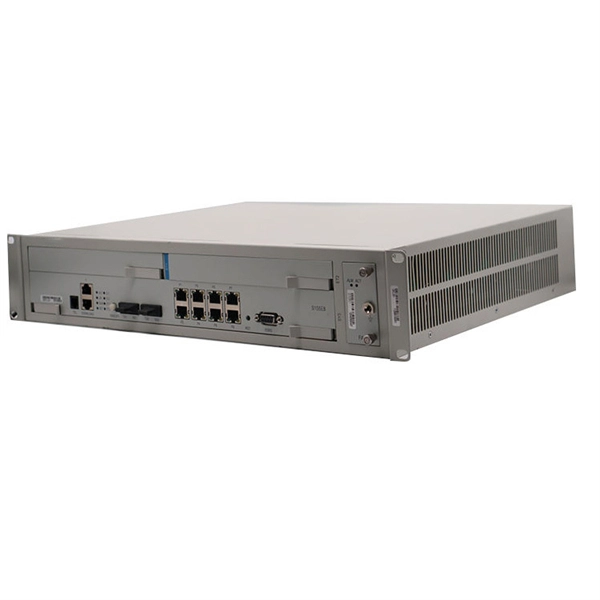
Standard optical splitters do not introduce significant delay; any delay is typically negligible, though specialized devices can implement configurable delays if needed.
Standard Optical Splitters
Optical splitters, also known as beam splitters, are passive devices that divide a single optical signal into multiple outputs or combine multiple signals into one. They operate using either Fused Biconical Taper (FBT) or Planar Lightwave Circuit (PLC) technologies, which rely on precise fiber coupling or integrated waveguides to distribute light efficiently. Because they are passive, they do not actively process the signal, and the propagation delay through the splitter is extremely small, typically on the order of picoseconds to nanoseconds, which is negligible for most applications.
Factors Affecting Signal Timing
While standard splitters do not introduce meaningful delay, insertion loss and slight differences in optical path lengths between outputs can cause minimal timing variations. These variations are usually insignificant in telecommunications or FTTH networks but may be noticeable in high-precision audio or synchronized systems. Environmental factors like temperature changes or mechanical stress can slightly affect the optical path, but these effects are minor and gradual.
Splitters with Adjustable DelayFor applications requiring precise timing alignment, such as synchronizing front speakers with subwoofers in audio systems, specialized devices exist that combine optical splitting with configurable digital delay. Products like the miniDSP Flex allow one optical input to be split into two outputs with adjustable delay on one output, enabling phase alignment between channels. These devices are not standard splitters but rather digital signal processors that include delay functionality.
Summary
Standard optical splitters: negligible delay, passive, mainly insertion loss matters. Timing-sensitive applications: may require digital delay devices in addition to splitting. Adjustable delay splitters: available through DSP-based solutions, not typical passive splitters.
In conclusion, for most fiber-optic network applications, optical splitters do not introduce any meaningful delay, but for specialized audio or timing-critical systems, additional digital delay hardware may be necessary.